

At the moment, I’m building AI tools that help some of the world’s largest tech companies create, find and manage their brand imagery. So here’s what’s actually going on inside those companies, and why they’re buying less from stock sites like Getty.
Large enterprises are building their own internal stock libraries
Companies are still using stock images, but where they source them has changed. They are now creating these images internally using AI, allowing them to tailor every image to the company's brand and style. It also means they own the full rights to all generated assets. These custom stock libraries are then made available to employees, rather than letting everyone generate AI images from scratch.
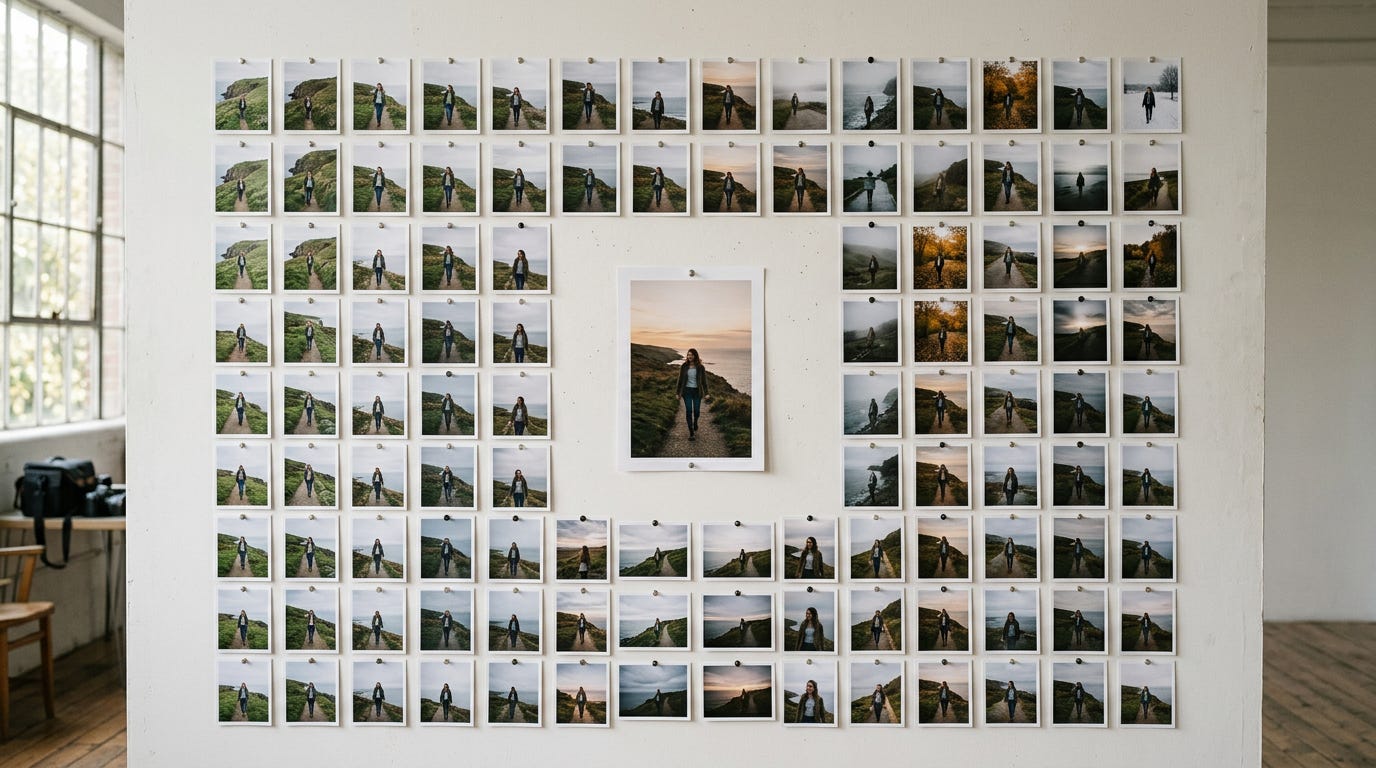
It usually starts with a normal photo shoot in the brand’s style. AI is then used to create thousands of variations from those photos, with different backgrounds, settings, crops and formats. One shoot can fill an internal library the whole company uses for months.
A big reason is licensing. With stock images, you pay for the rights to use them, often for a set time, channel or region. Big companies end up with stock images still sitting on websites and in decks and campaigns that they don’t have the rights to anymore. If you own the photos, you don’t have that problem.
The other reason is brand style. Stock libraries are made for everyone, so the images never quite match your brand. An internal library is made in your style from the start. And every company that builds one buys less from stock agencies, or nothing at all.
Companies are restricting who can make AI images
You might picture everyone at a big company generating images whenever they like. However, I’ve actually seen several companies ban their staff from generating images on their own.
The reason is quality. Companies need the images going out to the public to meet a certain standard. That standard used to come from the stock companies, and from the designers choosing which stock images to use.
So instead, they’re setting up dedicated teams, usually graphic designers trained to create images with AI. Their job is to keep everything on-brand and make sure no AI slop gets out. What they make feeds the same internal library, so everyone gets on-brand AI images without making them themselves.
Real photos still matter
Big companies haven’t stopped using real photography. Customers still prefer real images, and AI images can hurt trust.
The numbers back this up. In a Harris Poll UK study, seven in ten consumers trusted ads made entirely by people. That dropped to four in ten when AI tools were used, and two in ten when the ad was made by AI alone. Six in ten said a person should always be involved (The Harris Poll UK).
So a lot of the time, AI is used to edit real photos rather than replace them. A background gets swapped, a product colour gets changed, or a crop gets adapted for a new format. Most people can’t tell. In a Talker Research survey of 2,000 US consumers, only 20% correctly spotted real product photos that had been edited with AI (FOX59).
Companies are also using AI to find images. Searching a stock library for the right shot can take a creative team hours. Now they’re building tools that search their own libraries, and the stock sites they still pay for, much faster.
Smaller businesses are moving faster
Smaller businesses work differently. They have fewer sign-offs and less brand to protect, so they move quicker and take more risks online.
A lot of them skip the photo shoot and generate images from scratch. If you don’t have a photography budget, AI gets you images you’d otherwise have bought from a stock site or gone without.
That’s another group of customers stock agencies are losing. Stock used to be the cheap option, and now AI is cheaper. The trust numbers still apply, though, so the small businesses doing this well have someone checking every image.
The money
The savings are a big part of why this is happening. The best public example I know of is Klarna. In 2024 it said AI cut about $6 million a year from its image production costs, while it made more images than before (Marketing Dive).
It got faster too. Klarna made over 1,000 images in one quarter and cut the time to develop an image from six weeks to seven days. Its CMO said AI had removed the need for stock imagery.
That lines up with what I see. Companies save on licence fees, on shoots, and on the hours spent searching for images. The licensing savings are hard to put a number on, but an expired licence can end up as a legal bill.
One thing to watch: most of the big percentage savings you’ll see online come from companies selling AI photography tools. I’d test it on your own work before believing a “90% cheaper” claim.
Where this leaves stock agencies
Stock imagery isn’t going fully away yet. Companies still buy it, especially when they need real photos of real moments. They just buy a lot less, because they can now make a lot of it themselves.
Big companies shoot once, use AI to create variations, keep it in the hands of trained teams, and own the lot. Smaller businesses generate what they need. Either way, there’s less reason to rent images from an agency.
That’s a big part of why Getty was in such a tough spot. If your business is selling images to companies, you now have to offer something they can’t make themselves.
FYI: what actually happened at Getty
Getty Images filed for Chapter 11 bankruptcy in Delaware on 21 October 2026. It’s a planned restructuring, and the company is still running. Getty says customers, contributors and employees won’t be affected, and it expects to finish by the end of the year (CNBC).
The plan cuts more than $500 million from about $1.46 billion of debt and cancels every existing share, so public shareholders get nothing. The Getty family and Koch Equity Development are investing up to $533 million and will own the whole company (PPC Land).
Getty’s own filing blames three things: heavy debt, lawsuits from investors, and the collapse of its $3.7 billion merger with Shutterstock (court filing summary). Much of the debt dates from its private equity years (GeekWire). The lawsuits weren’t about AI. They concerned warrants from Getty’s 2022 stock market listing, and its lawyer told Reuters they sped up the filing (IBTimes UK). The merger fell through after the UK competition regulator demanded Shutterstock sell its editorial business (The Hollywood Reporter).
AI didn’t cause the bankruptcy on its own, but falling demand for paid stock images made that debt much harder to pay down (PYMNTS).
Sources
CNBC: Getty Images files for bankruptcy, advances restructuring plan
PPC Land: Getty Images files Chapter 11 to cut more than $500m of debt
GeekWire: Getty Images to keep Seattle HQ as it goes private through bankruptcy
IBTimes UK: Getty Images files for bankruptcy after AI undercuts licensing
The Hollywood Reporter: Getty Images to file for bankruptcy, go private
PYMNTS: Getty Images files for bankruptcy as $533M restructuring paves way for private ownership
Marketing Dive: Klarna uses AI to save $10M on marketing annually